Designing a Platform for Pluriverse Sustainability

Which worldviews determine what is considered a sustainable future? What we see when we look at the world is never unconditional; it is shaped by language, history, systems of knowledge, and cultural orders. The same landscape of rivers, lakes, mountains, fertile valleys, and countless species may appear, from a Western materialist perspective, as the sum of ecosystem services and natural resources. From the perspective of Indigenous philosophies, however, the living world is not a stockpile of exploitable resources, but a web of relationships, gifts, and responsibilities; a world inhabited by non-human kin that sustains and holds humans accountable (see Kimmerer et al. 2018: 27). The difference, therefore, lies not only in different terms for the same reality, but in different ways of experiencing, organizing, and relating to the world.
This is where the idea of the pluriverse comes in. It challenges the assumption that there must be only one world, one modernity, and one future that applies to everyone. Instead, the pluriverse points to the possibility of many worlds, forms of knowledge, and ways of life that can coexist and challenge one another. In this context, indigenous knowledge systems do not appear as romantic counter-narratives to modernity, nor as mere relics of the past. They are contextually rooted, living, and future-oriented forms of knowledge that reveal alternative relationships between humans, non-human beings, land, technology, history, and responsibility.
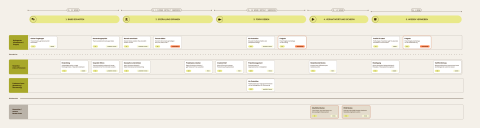
At the heart of this work is the development of a prototype: the TELA knowledge platform. This work is intended as a contribution to decolonial design that goes beyond mere criticism to create a concrete creative space in which different knowledge systems can coexist on an equal footing. Essentially, the TELA platform aims to demonstrate that abstract ideas such as pluriversity and two-eyed seeing can be translated into an interface, thereby generating tools and methods that can be further tested and applied to other projects.