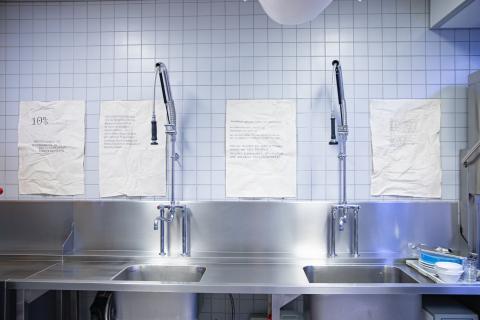
10% (Ten percent)

Considerations of psychosomatics in gastronomic working environments
The kitchen is a place where procedures must run smoothly; it is a dangerous workplace where intense periods of stress occur. Customers are kings and queens who are denied a glimpse into the processes and work steps. Work steps that must be completed under time and performance pressure. Workers in the catering industry operate in heterogeneous, often precarious occupational fields that have been surprisingly underrepresented in scientific research to date. While labor and social policy issues have long been comprehensively analyzed in other industries, this has mostly only been done sporadically and selectively in the catering industry. This raises numerous questions: How do chefs, service staff, and bar staff deal with stress? What motivates them to work in an environment characterized by constant tension? What working models exist, and how do shift systems affect the body and psyche? What does decent work mean in this context? And how do the workers themselves view their work—between passion, exhaustion, and social invisibility?
The focus of the work is on revealing, sensitively uncovering everything that happens behind the swinging doors. The space should be opened up to positive and negative experiences, desires, traumas, and hopes. The restaurant scene is huge, and every single establishment is a machine of logistical, sociological, economic, ecological, and psychological actions and events. This breeding ground has been researched, brought to life, and presented in a comprehensible way.